Putting a Large Michigan Utility’s Water Quality Report to Use at Home
A large Michigan utility’s water quality report can answer useful questions, but it cannot tell you exactly what is in every home’s tap. The challenge is knowing which report applies to your address, what its results mean, and when a household test or follow-up question is more useful than another round of reading.
First, make sure you have the right report
A report is only useful if it describes the water system that serves your home. In Michigan, a large utility may treat water for other communities, while a separate local supplier handles service to an individual address. That can leave residents unsure whether to read the large supplier’s report, their local supplier’s report, or both.
Start with the water supplier named on your bill, welcome materials, or utility account. If you rent, ask the property manager or landlord which supplier serves the building. If you are not sure, the local utility can confirm which system serves your address. Which Utility Serves This Address? A Water Lookup Guide
Then check how the report describes its service area. A report from a wholesale supplier may describe water before or during delivery to another system; the local supplier may provide additional context about water delivered to customers. Understanding that relationship can help you avoid treating a report for a regional supplier as a test of your own faucet. Wholesale Water: When a Town Buys From a Bigger Supplier
If your community buys water from a large supplier, both reports may be relevant. The large supplier’s report can help explain the quality of water it provides. Your local supplier’s report may be the better place to look for information about the system serving your neighborhood. Ask the local supplier how to interpret the reports together rather than assuming one replaces the other.
Before reading the results, note the report’s name, the system it covers, and the period it describes. Keep those details with the document. If you later ask a question about a result, identifying the system and report period makes it easier for the utility to respond clearly.
If the report is hard to find, your water supplier can direct you to its current report through its official website. A report from a nearby city may look similar but describe a different water system. How to Find Your Michigan Water Supplier’s Consumer Confidence Report
Read the report in a useful order
Water quality reports can be dense, especially when they use technical terms, laboratory units, and tables of monitoring results. You do not need to understand every line before getting useful information. Start with the parts that establish what the report covers, then focus on the results that matter to your question.
Check the system and the reporting period
First, confirm that the report covers the supplier you identified. Look for the system name and service area, and check that the document is the report you meant to review. If you have more than one report because your community receives water from a larger supplier, keep the documents separate until you understand what each one covers.
Next, find the report’s explanation of its monitoring period. That tells you when the reported results were collected or summarized. Avoid treating a report as a live measurement of the water at your tap today. It describes monitoring for the system and period it identifies.
If you are comparing reports from two communities, don’t assume the figures are directly comparable just because the tables look alike. The systems may use different sources, sampling locations, or reporting formats. Comparing Water Quality Reports Before a Move Between Michigan Cities
Learn what the table is measuring
Find the table that lists detected substances or water quality results. Read the column headings before focusing on any particular value. A result can be difficult to interpret if you do not know the units, the type of sample, or whether the number represents an average, a range, or another reported measure.
Reports may use terms such as “maximum contaminant level,” “action level,” or “maximum residual disinfectant level.” These terms do not all describe the same kind of benchmark. The report’s definitions and notes are important; do not treat every benchmark as interchangeable or as a direct measurement of your kitchen tap. MCLs, Action Levels and Units: Reading a Michigan Water Report Table
Pay attention to whether a result was detected, not detected, or reported in another way. “Not detected” is not necessarily the same as zero. It means the result was not detected under the method and reporting conditions described by the laboratory or report. If you need to understand what the detection wording means for a particular substance, read the report notes or ask the supplier. Does ‘Not Detected’ on a Michigan Water Test Mean Zero?
Look for footnotes. They may explain how results were calculated, whether a value is a range, what a unit means, or why a table contains a particular entry. A footnote can change how a result should be understood, so it is worth reading before drawing a conclusion.
Separate system information from household information
A utility report describes monitoring for the water system it covers. It does not automatically describe the water after it has passed through the plumbing in a specific house or apartment. The material and condition of indoor pipes, fixtures, and plumbing components can affect what comes out of an individual tap.
This distinction matters most when your concern involves something that may come from household plumbing. A system-wide result cannot confirm the material of your service line or tell you whether a particular faucet has a plumbing issue. If lead is your concern, read the supplier’s information alongside what you know about the service line and indoor plumbing. Does Your City’s Water Report Show What Comes Out of Your Own Tap?
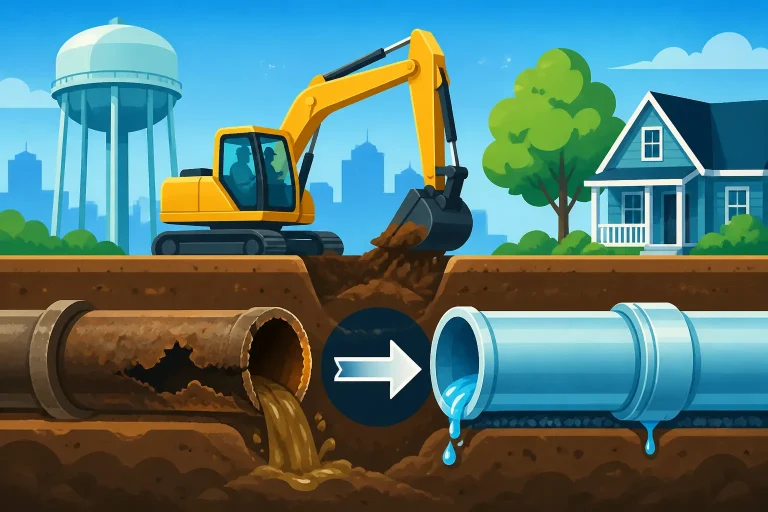
For a lead concern, a report’s system-wide information should not be treated as a substitute for an assessment of your own plumbing or a tap sample. A household’s results can differ from system monitoring. Lead After Line Replacement: What Can Linger in Michigan Home Plumbing
Turn report details into practical questions
A good report-reading session should leave you with a small set of useful questions, not just a list of unfamiliar terms. Match the information you find to the issue you are trying to understand.
| What you want to know | What to check in the report | What to do next |
|---|---|---|
| Which system does this report describe? | System name, service area, and report period | Confirm with the supplier that the system serves your address |
| What does a result mean? | Substance name, units, benchmark, and table notes | Ask the supplier to explain the table entry and its context |
| Does the result describe my faucet? | Sampling description and report scope | Ask whether a household sample is appropriate for your concern |
| Where does the water come from? | Source-water or treatment discussion, if included | Compare the report with the supplier’s explanation of its system |
| Is there a lead concern in my home? | Lead information and any explanation of sampling | Check your service-line status and consider a tap test |
| Should I buy a filter? | The specific substance and reported result relevant to your concern | Test or confirm the concern first, then match treatment to the result |
The table is a way to organize your next step, not a substitute for the report’s own definitions. If you cannot tell whether a result is a system-wide figure or a sample from a particular location, ask the supplier before using it to make a household decision.
Ask focused follow-up questions
A useful question identifies the report entry and asks for a specific explanation. For example, you might ask what a unit means, where a sample was collected, or whether a particular result represents water delivered to your local system or a sample from a customer’s tap.
If the report lists a substance you are concerned about, ask the supplier whether the result applies to the system serving your address and whether it recommends any follow-up. If your concern is about a private household plumbing source, ask whether the supplier’s data can address it or whether a tap sample is more appropriate.
If the supplier is not the right party to answer a question about a home’s plumbing, a qualified plumber or an independent laboratory may be able to help with the specific issue. Keep the question narrow: identify the concern, the location where it occurs, and the report detail that prompted it.
Check source and treatment details in context
Reports may describe the water source or treatment process. Use that information as context, not as a shortcut to deciding whether the water at home needs treatment. A source description does not by itself establish what a household faucet delivers, and treatment details do not answer every question about a home’s pipes or fixtures. Where a Michigan Water Report Names the Source Behind Your Tap
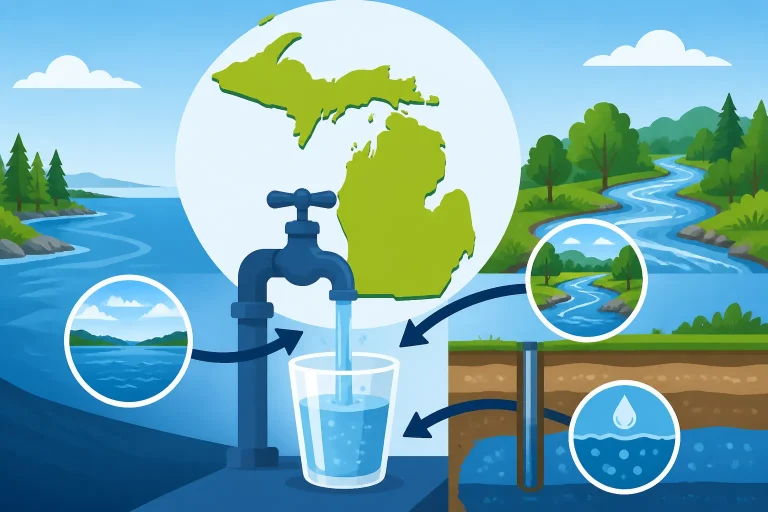
If you want to understand whether the water is supplied from surface water or groundwater, look for the report’s source discussion and compare it with information about your local system. Different source types can help explain why systems operate differently, but they do not replace a review of the report’s actual results. Surface Water or Groundwater? How Michigan Community Systems Differ
The Michigan PFAS Action Response Team’s geographic information system includes public water supply results among its datasets. That resource can offer another way to look for public-supply information, but a map entry should not be confused with a sample from your home. MPART’s Map of Public Water Supply Results: How to Find Your City
Decide whether the report answers your household question
Some questions are best answered by the utility report. Others need information about your address, building, or tap. Before ordering a test or buying treatment, state your question as specifically as possible: “What does this system’s report say?” is different from “What is in the water from this kitchen faucet?”
If you are concerned about a substance reported for the system, first confirm that the report is for your supplier and understand the table entry. Ask the supplier whether additional information is available for your service area. If you still need a result for your own tap, ask a laboratory or relevant local authority what sample and test would address that question. How to Test Your Water in Michigan: Labs, Sample Kits and Costs
A home sample can answer a different question from system monitoring. It may be useful when the issue could vary from one building or tap to another, or when you want to establish a result for your own water. The test should be chosen for the concern you are investigating; a general test does not necessarily cover every substance you may be worried about. Basic Screen or Full Panel? Choosing What to Test for in Michigan
For lead, the plumbing in and around a home is an important part of the question. A report may give context about the system, but it cannot identify the pipe materials at your property or measure every tap. If you do not know your service-line material, investigate that separately. How to Tell Whether Your Michigan Service Line Is Lead
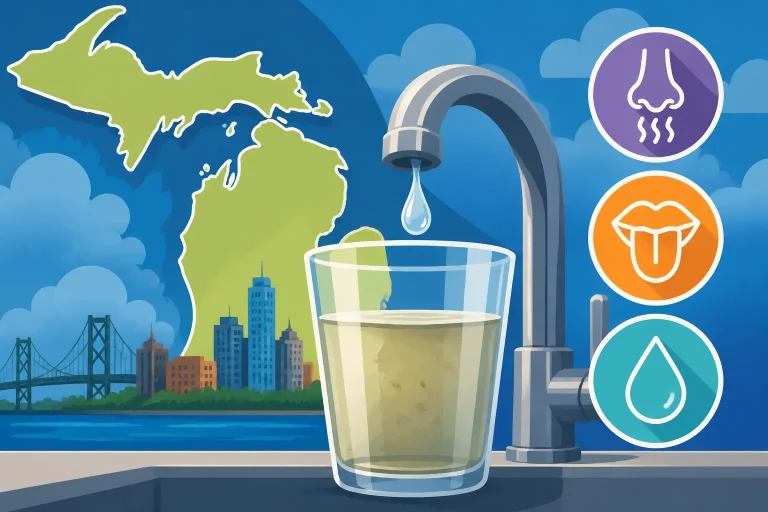
For taste, smell, or color changes, the report may not explain what you notice at one faucet. The pattern can help narrow the next question: whether it happens at one tap or several, only with hot water, or after a change in service. Those observations do not identify a cause on their own, but they can help the supplier or a plumbing professional respond more effectively. Taste, Smell and Color: A Guide to Odd Tap Water in Michigan Cities
Don’t choose treatment from a report headline alone
A report entry should not be the only reason to install a filter or treatment system. First establish what result you are addressing and whether it applies to your home. Then check that any treatment product is certified for the specific substance and reduction claim relevant to your test results. Product claims vary, and a device designed for one issue may not address another.
A report also cannot confirm that a filter is installed or maintained correctly in your home. If you already have a treatment system, identify what it is intended to reduce and follow its maintenance directions. If the original reason for installing it is unclear, a water test may help clarify whether the system matches the current concern. Choosing a Michigan Water Treatment System After You Test, Not Before
Be cautious about broad claims that a single device “fixes” water quality. Treatment depends on the contaminant, the water being treated, and the product’s verified performance. Ask for documentation of the specific certification and reduction claim, and compare it with the result you are trying to address.
For a health question about an exposure or a test result, ask your local health department or a medical professional. A utility report is useful for understanding system monitoring, but it is not individualized medical advice.
Keep the report useful after you read it
Save the report with the name of the system it covers and the period described. If you move, compare water systems, or receive a notice from a supplier, having the relevant report details handy can make it easier to ask a clear question.
It can also help to keep a short note beside the report:
- Which supplier serves the address
- Whether the report is from a local supplier or a larger wholesale supplier
- Which table entry prompted your question
- What the units and footnotes say
- Whether you need system information, a service-line check, or a tap sample
If the report does not answer your question, that does not make it useless. It may still provide context about the public system while pointing you toward a separate check of your building, service line, or tap. Who Answers for Water Safety in Michigan: Utility or Homeowner?
When contacting a supplier, refer to the system name and the specific report entry. Ask for clarification rather than assuming that a table value proves a problem or proves there is no household concern. If the answer does not resolve the issue, ask what kind of test or professional would be appropriate for the question you have.
The most useful way to read a large utility’s report is to treat it as one part of the picture. Confirm that it applies to your address, read the table with its notes, and distinguish system monitoring from conditions in your home. Then use the report to decide whether you need a supplier explanation, a plumbing check, or a test of your own tap.
Frequently Asked Questions
Does a large utility’s report show what comes out of my faucet?
Not necessarily. The report describes the public water system and monitoring it covers. Water can also be affected by the service line and plumbing within an individual building, so a household tap sample may be needed for some questions.
Should I read the large supplier’s report or my local supplier’s report?
Start with the supplier that serves your address. If your community receives water from a larger supplier, both reports may provide useful context. Ask the local supplier how the documents relate to each other.
Can I use a report to decide which filter to buy?
Use the report to understand the system information it provides, but do not choose a filter based on a headline alone. Confirm the result relevant to your home and check that the product is certified for the specific reduction claim you need.
What should I do if I do not understand a table entry?
Read its units, definitions, and footnotes, then ask the supplier to explain the specific entry and whether it applies to the system serving your address. If you need an individual household result, ask what test would answer that question.
Sources
- Michigan PFAS Action Response Team (checked November 13, 2026)
Disclaimer
This article is for general informational purposes only and does not constitute professional advice. Laws, prices and regulations vary by location and change over time. Consult a qualified professional for guidance on your specific situation. Michigan Water Guide is not a government agency or water utility and is not affiliated with any public water system.