How Tap Water Taste Differs From One Michigan City to the Next
Tap water can taste crisp at one Michigan address and earthy, mineral-like, or pool-like at another. That difference does not automatically mean one supply is unsafe: source water, treatment, plumbing, and even the glass can shape flavor. Here’s how to narrow down what you’re tasting, compare cities fairly, and know when a change deserves a closer look.
Why tap water tastes different across Michigan
“Tap water” is not one uniform product. Michigan communities draw from different sources, use different treatment processes, and deliver water through different networks. Even neighboring communities may buy water from different suppliers or treat their own sources. These differences can affect taste and smell without necessarily indicating a safety problem.
A useful starting point is to separate three layers:
- The source: Water may come from a lake, river, or underground aquifer. Natural minerals and organic material vary from place to place and can influence flavor.
- Treatment and distribution: Treatment methods, disinfectants, storage, and the route through water mains can affect what reaches a building.
- The home’s plumbing: Pipes, a water heater, faucet aerators, and filters can alter water after it enters the property.
That is why a broad statement such as “Michigan water tastes like this” usually misses the point. A person’s impression may be accurate for their home or neighborhood, but it does not necessarily describe an entire city, much less the state.
Michigan’s freshwater geography is diverse. Some communities treat water from the Great Lakes or other surface sources; others rely on groundwater. The details matter because a surface-water supply and a groundwater supply can begin with different natural characteristics and require different treatment approaches. For more context, see Where Michigan Tap Water Comes From: Lakes, Rivers and Groundwater and Surface Water or Groundwater? How Michigan Community Systems Differ.
What people mean by “taste”
Taste descriptions are subjective, but they can still help identify a likely cause. People often use words such as:
- Chlorine-like or pool-like: A disinfectant taste or odor may be noticeable, especially when someone is sensitive to it.
- Earthy, grassy, or musty: Natural compounds in source water, seasonal changes, or conditions in household plumbing may be possibilities.
- Mineral-like or hard: Dissolved minerals can leave a noticeable flavor, sometimes described as chalky, dry, or metallic.
- Metallic: Plumbing materials, corrosion, or a water heater may be worth considering, particularly if the taste is stronger at one fixture.
- Salty: The cause depends on the supply and the home; a new or persistent salty taste is worth investigating rather than assuming it is harmless.
- Flat or stale: Water that has stood in pipes, a pitcher, or a warm glass may taste different from freshly drawn water.
These are clues, not diagnoses. The same description can have more than one explanation. “Metallic,” for example, could refer to a source-water characteristic, a plumbing issue, or simply a person’s sensitivity to a particular flavor.
Taste also does not reliably reveal whether water meets drinking-water standards. Some contaminants have no noticeable taste, odor, or color. Conversely, a strong taste may come from an aesthetic characteristic that is not itself a sign of a health hazard. If the question is safety, use test results and official information rather than relying on flavor alone.
Source water, minerals, and seasonal character
The natural character of a city’s source water is one reason taste can vary. Groundwater moves through soil and rock, where it can pick up dissolved minerals. Surface water comes from lakes and rivers and may vary with weather, season, and conditions in the watershed. Treatment is designed to make water suitable for distribution, but it does not make every supply taste identical.
Groundwater and mineral flavor
Groundwater can contain minerals that affect hardness and flavor. Hardness is mainly related to calcium and magnesium. Some people barely notice it; others describe hard water as mineral-like, slightly bitter, or as leaving a dry sensation. Hardness can also contribute to scale on fixtures and appliances, but those signs are not a precise measure of what the water tastes like.
Groundwater sources differ from one place to another because the geology and well conditions differ. A community using groundwater may have a distinctive mineral profile, but that does not mean all groundwater systems taste alike. Nor can a neighboring well or city’s report reliably describe the water at a particular tap. See What Is Hard Water? A Michigan Guide to Hardness, Iron and Sulfur for how hardness and other common characteristics differ.
Iron and manganese may also affect appearance or taste in some supplies, especially when concentrations or treatment conditions vary. They can be associated with staining, but a stain is not enough to identify the cause. A test or the supplier’s information is more useful than guessing from taste alone.
Surface water and seasonal changes
Surface water can change with seasonal conditions. Algae and naturally occurring organic material may contribute to earthy or musty sensations. Treatment plants monitor and adjust their processes as source conditions change, but a person may still notice a difference from one season to another.
A seasonal change in taste is not proof that a system is failing. It is also not proof that the change is harmless. If a taste or odor appears suddenly, affects several homes, or continues beyond a brief period, check the water supplier’s current notices and ask whether the change is known. An abrupt change at only one faucet points more toward a building-level issue, though it is not conclusive.
A comparison between cities is most useful when it accounts for source type and season. Someone comparing water from two communities in different months may be noticing a seasonal change as much as a difference between the systems.
Why the source does not tell the whole story
A source-water label—such as “lake water” or “groundwater”—does not predict the exact taste at the tap. Treatment can change the water’s characteristics, and the distribution system adds another stage. Communities may use different treatment steps, disinfectants, or blending approaches, depending on their source and system needs.
To understand a particular city, look for its consumer confidence report, often called a water quality report or CCR. It can identify the source and summarize regulated monitoring, but it is not a tasting report, and it does not necessarily describe every flavor characteristic. The report also represents system-wide monitoring rather than a test of every household tap. Michigan Water Quality Reports: A Resident’s Guide to the CCR explains what these reports can and cannot tell you.
Treatment, disinfectants, and the route to your tap
Treatment is another reason two cities can taste different. Public water systems must treat and monitor water according to applicable requirements, but their methods are not identical. Treatment depends on the source, the conditions being managed, and how water is stored and delivered.
Disinfectant taste and odor
Many people recognize a chlorine-like taste or smell. Disinfection is an important part of public water treatment, and a detectable taste does not by itself show that the water is unsafe or that the system has used too much disinfectant. The appropriate way to assess a concern is to check the supplier’s information and applicable monitoring results, not to judge by taste alone.
Some systems use chloramine, a disinfectant made by combining chlorine and ammonia. It can have a different taste or odor profile from chlorine, and people may describe it in different ways. Whether letting water stand changes the taste depends on the disinfectant and conditions; it is not a universal fix. See Chloramine in Tap Water: Does Letting It Stand Remove It? for a closer look.
A water supplier’s treatment choice is specific to its system. Do not assume that a taste noticed in one city has the same cause in another. If a new odor is strong or persistent, check for a system notice or contact the supplier through its official website for current information.
Distribution and storage
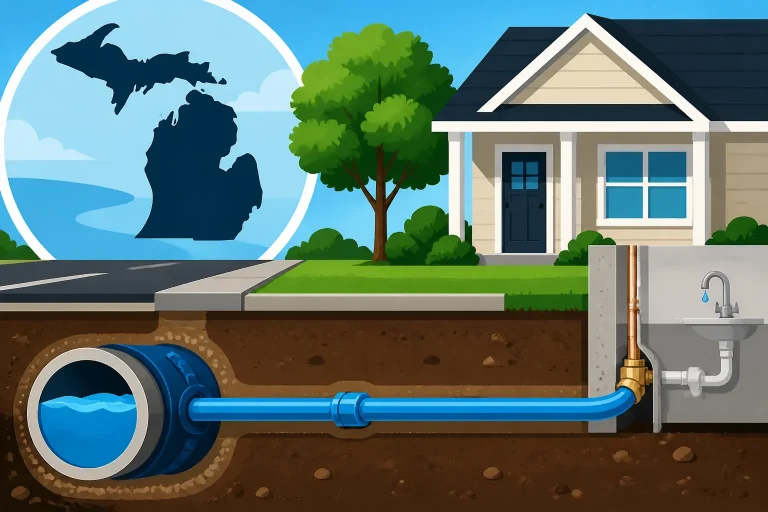
After treatment, water travels through mains, service lines, and building plumbing. Storage tanks and the time water spends in pipes can influence taste. Water that has been sitting in a line overnight may taste different from water that has been flowing recently. Warm conditions, long periods of low use, and the condition of plumbing can also affect what a person notices.
Water can change as it moves through a home, too. A tap close to the service entry may not taste exactly like a faucet at the far end of the building. A refrigerator dispenser, pitcher, or filter adds more variables. This does not mean the water is necessarily a problem; it means a taste comparison needs to control for where and how the sample was collected.
The home can add its own flavor
If a taste occurs at only one faucet, consider the fixture before drawing conclusions about the city supply. A faucet aerator can collect sediment or debris. A filter may be overdue for replacement, installed incorrectly, or unsuitable for the concern. A water heater can contribute a different taste to hot water, so compare cold and hot water separately.
A simple comparison can help:
| What you notice | Useful first comparison | What it may help narrow down |
|---|---|---|
| Taste at one faucet only | Compare cold water from another tap | Faucet, aerator, or local plumbing |
| Taste in hot water only | Compare cold and hot water at the same fixture | Water heater or hot-water plumbing |
| Taste at every tap, but not in bottled water | Compare after flushing and check supplier updates | Building plumbing or a broader supply change |
| Taste from a pitcher or refrigerator only | Compare directly from the tap | Filter, dispenser, storage, or refrigerator line |
| Several neighbors report the same new taste | Check the supplier’s current notices | A change affecting the distribution area |
| Taste changes with the season | Compare observations across the same taps and months | Seasonal source conditions or treatment changes |
These comparisons are informal troubleshooting, not a substitute for a water test. They are most helpful for identifying whether the issue follows a particular fixture, the building, or a wider area.
How to compare two Michigan cities fairly
A useful comparison asks more than “Which city tastes better?” It identifies what water is being compared, where it was collected, and whether the same conditions applied.
Confirm the supplier and source
A city name alone may not identify the water supplier. Service boundaries can differ from municipal boundaries, and a community may buy treated water from a larger supplier. A home in a suburb may receive water from a regional system rather than a local treatment plant.
Start by confirming which supplier serves each address. Then check the supplier’s report for its listed source and treatment information. Which Utility Serves This Address? A Water Lookup Guide can help clarify why the right supplier is not always obvious from a city name.
If one city uses a surface-water source and another relies on groundwater, expect that the water may differ in mineral character and seasonal behavior. If both use water from the same regional supplier, the source may be shared, but differences can still arise from local distribution, plumbing, or how the water is sampled.
Compare the same kind of water
To reduce misleading differences:
- Use cold water from the same type of faucet in each home.
- Use clean glasses without soap, dishwasher, or food odors.
- Collect water after a similar amount of flushing, especially if the taps have not been used for several hours.
- Compare at roughly the same temperature.
- Avoid comparing filtered water in one home with unfiltered water in another.
- Record the date and whether the taste is typical or unusual.
A blind taste comparison can reduce the influence of expectation, but it still cannot establish water quality. People’s sensitivity to chlorine, minerals, and earthy flavors varies. A person may find one supply more pleasant without the difference indicating a safety advantage.
Read the report for context, not a flavor score
A CCR is useful for understanding the regulated monitoring and general source information for a public water system. It is not a complete inventory of every possible substance, and it does not give a direct score for taste. Some characteristics that influence flavor may not be presented in the same way as regulated contaminants.
When reading a report, check the reporting period, the system name, the source, and the units used. Make sure the report applies to the actual supplier for the address. If a result or term is unclear, ask the supplier what it means rather than assuming that a reported value explains a taste.
For details about interpreting individual entries, see MCLs, Action Levels and Units: Reading a Michigan Water Report Table. If the concern is a change at your own tap, a system report may not answer the household-level question. Does Your City’s Water Report Show What Comes Out of Your Own Tap? explains that distinction.
When taste changes at home and what to do next
A stable, familiar taste that differs from another city’s water is usually a different situation from a sudden, unusual change in your own home. The pattern matters: when it started, which taps are affected, whether hot water is involved, and whether neighbors notice the same thing.
Start with simple checks
If water tastes different, take these steps before buying treatment equipment:
- Check the pattern. Try cold water at more than one tap. Compare hot and cold water separately.
- Look for a supplier notice. Check the official water supplier’s website for updates, advisories, or notices about flushing or maintenance.
- Ask nearby residents. If several homes notice the same change, it may be broader than one fixture.
- Inspect household devices. Check whether a pitcher, refrigerator, or faucet filter needs maintenance or replacement according to its instructions.
- Clean the faucet aerator if appropriate. Sediment or debris can affect flow and sometimes contribute to a local taste or appearance issue.
- Request an explanation or test. If the taste is persistent, unusual, or unexplained, contact the supplier or an appropriate certified laboratory to discuss what should be checked.
Do not assume that running the tap, using a pitcher, or boiling water will solve every taste concern. Those actions do not address all possible causes, and boiling is not a general-purpose way to improve water quality. Follow official instructions if an advisory is issued.
When a taste change deserves prompt attention
Contact the supplier promptly if the change is sudden and widespread, if the water has a chemical or fuel-like odor, or if an official notice advises customers to take action. Use the supplier’s official website to find current contact details and instructions. If there is an immediate concern about health effects, ask the local health department or a medical professional rather than trying to assess it by taste.
A rusty, brown, yellow, or cloudy appearance may have different causes from a taste change. If color and taste appear together, describe both when contacting the supplier. Taste, Smell and Color: A Guide to Odd Tap Water in Michigan Cities offers more ways to think through these symptoms.
If the taste is limited to one building or one fixture, the supplier may suggest checking household plumbing. For renters, it can help to tell the landlord which taps are affected and whether the issue is present in cold water, hot water, or both. Keep notes on when the change began and whether it is getting better or worse.
Choose treatment only for a defined concern
A filter can change taste, but the right choice depends on what it is designed and certified to reduce. A product marketed for taste may not address a different water-quality concern, and a system that reduces a specific substance is not automatically suitable for every home. Check the certification and performance claim against the water test or supplier information relevant to your concern.
Avoid buying a whole-house system based only on a salesperson’s taste test or a general claim about city water. First determine whether the taste is actually coming from the supply, the home’s plumbing, or an existing filter. For a known issue, review the relevant test results and compare them with the treatment device’s specific certification. Choosing a Michigan Water Treatment System After You Test, Not Before explains why matching a system to a measured need is more reliable than choosing by broad promises.
Taste preference is also a reasonable consideration. Some households choose a certified filter because they dislike a disinfectant or mineral taste, even when the supplier’s water meets applicable requirements. That is a comfort choice, not evidence that the untreated water is unsafe. Keep up with the device’s maintenance instructions; a neglected filter may not perform as intended and can itself affect taste.
Frequently Asked Questions
Does water taste different in every Michigan city?
Not necessarily in a way every person can notice, but supplies can differ in source, treatment, mineral content, and distribution. Plumbing and household filters add further variation, so taste can differ even within one city.
Does a chlorine taste mean tap water is unsafe?
No. A noticeable disinfectant taste alone does not establish whether water is safe or unsafe. Check the supplier’s information and monitoring results, and contact the supplier if the taste is new, strong, or persistent.
Can I tell whether water is safe by tasting it?
No. Taste, smell, and appearance cannot reliably identify all contaminants or confirm that water meets drinking-water standards. Use official information and appropriate testing for safety questions.
Why does only one faucet taste strange?
A faucet aerator, fixture, local plumbing, or connected filter may be involved. Compare cold water from another tap and check whether the taste occurs in hot water, cold water, or both.
Disclaimer
This article is for general informational purposes only and does not constitute professional advice. Laws, prices and regulations vary by location and change over time. Consult a qualified professional for guidance on your specific situation. Michigan Water Guide is not a government agency or water utility and is not affiliated with any public water system.